1 Jahr Garantie


Modicon M580: Buy the Architecture, Not Just the CPU
A low unit price can become an expensive retrofit when the CPU, backplane, remote I/O, network topology and engineering baseline are treated as separate afterthoughts.
The industrial automation conversation in 2026 is full of powerful words: connected operations, edge computing, cyber resilience and data-driven maintenance. Yet a modernization project can still lose time for a very ordinary reason—the purchased hardware does not match the architecture that engineering actually designed.
That is why a Modicon M580 request should not begin with “find the cheapest CPU.” It should begin with a system sentence. Which controller reference? Which local backplane? Which remote drops? Which network modules? Which installed X80 I/O? Which software and firmware baseline? When those answers travel together, quotations become comparable and receiving checks become practical.
Schneider Electric describes the M580 as an Ethernet programmable automation controller and publishes dedicated guides for frequently used architectures, complex topologies, hardware, safety and open Ethernet planning. The message for buyers is clear: M580 is a system architecture, not a single interchangeable box.

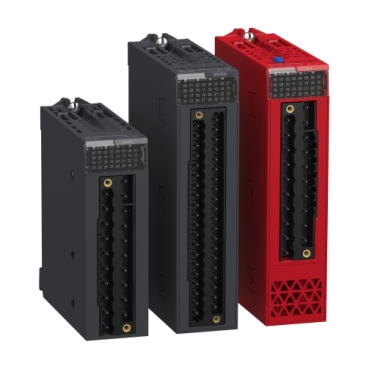
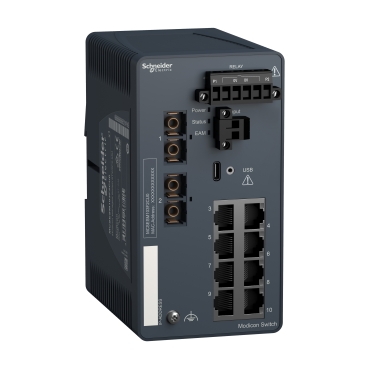
The six-point architecture check
Open the purchasing conversation in the same order that the control system is assembled.
A family name is not an orderable identity. The official hardware guide describes the controller, local backplane, power supply, communication modules and I/O as related parts of a modular PAC system. Procurement should therefore preserve the complete commercial reference for every quoted component rather than infer compatibility from the word “M580.”
The six points above are a review sequence, not a universal bill of material. CPU duties, rack composition, remote-drop design, communication roles and project limits must be checked against the selected references and the approved application architecture.
Build an M580 purchasing passport
This compact record gives suppliers enough context to identify mismatches before they become site delays.
Why Ethernet modernization changes the RFQ
The official M580 architecture material places Ethernet at the system backbone. That makes network context part of the bill of material, not a commissioning footnote.
Local rack is not the entire system
The controller processes the application and manages configured modules and devices, while modules can reside locally or in remote drops. A CPU-only request hides the rest of that relationship.
Remote I/O needs a topology sentence
Schneider Electric documents RIO drops, distributed equipment, main rings and sub-rings. State the intended topology and adapter references rather than asking for a generic “M580 remote I/O module.”
X80 compatibility is a project question
Many Modicon X80 modules are used across M340 and M580 environments, while Ethernet eX80 modules have their own supported placement. Compatibility should be checked against the actual rack and project, not inferred from a shared family name.
Safety is a defined system—not a label
Schneider Electric publishes a separate M580 Safety system guide. If the project is safety-related, specify the safety architecture and qualified references explicitly; do not assume a standard controller automatically satisfies that requirement.
Ethernet is the backbone, but each connection still has a defined system role. Schneider Electric documentation distinguishes the local backplane, Ethernet RIO communication and distributed equipment. A purchasing description should keep those roles visible because devices that use Ethernet are not automatically interchangeable within the control architecture.
The official guides also separate frequently used architectures from complex-topology guidance. A diagram in a guide demonstrates a supported design method under stated conditions; it is not permission to copy the same layout into every project without checking CPU capability, module placement, topology rules and performance limits.
The 2026 cybersecurity buying conversation
Security claims are easy to repeat and hard to operationalize. Convert them into information that can be checked during procurement and handover.
Record the complete part number and hardware identity. Similar names are not a substitute for the specified reference.
Request the available firmware information and confirm the approved baseline with the responsible engineer before commissioning.
Keep project files, network design, access rules and change records under the project owner’s controlled process.
Record permitted services, user roles, network boundaries and the approved security configuration before commissioning.
Procurement can preserve identity and evidence; it cannot approve the security configuration. A supplier may confirm the quoted reference, visible condition, included accessories and agreed documents. User roles, enabled services, network segmentation, application protection and change control remain project decisions for the designated engineering and cybersecurity teams.
For a traceable order, record the security-related deliverables that must accompany the hardware—such as the approved firmware baseline, configuration ownership and change record—without asking the supplier to invent settings outside the project design.
What the major M580 purchase groups actually mean
CPU references
Define processing role, architecture type and project-specific communication requirements.
Backplanes & power
Confirm slot layout, bus type, rack expansion and the matched power arrangement.
CRA adapters
Identify each drop, adapter reference, rack content and intended Ethernet topology.
Network modules
Separate ordinary switching, control-network, protocol and project-specific communication needs.
X80 I/O
Verify the exact module code, channel type, terminal arrangement and supported system position.
Software & firmware
Treat versions, backups and commissioning evidence as deliverables, not invisible assumptions.
The low-price mismatch map
A quote can look inexpensive because part of the required architecture is missing from the comparison.
| What the quote says | What may still be missing | Buyer’s next question |
|---|---|---|
| “M580 CPU available” | Exact reference, architecture type, condition and version evidence | Which complete commercial reference is on the label and quotation? |
| “Compatible rack included” | Backplane bus type, slot count, power supply and expansion plan | List every rack and power reference separately. |
| “Works with X80” | Actual local or remote placement and supported project configuration | Which installed I/O list and rack position were checked? |
| “Ethernet ready” | Network module role, ring design, protocols and commissioning scope | Which network architecture is this quotation built around? |
| “Safety PLC” | Approved safety-system components and project validation | Which safety references and engineering requirements apply? |
Compare identical scopes before comparing totals. One quotation may include only the CPU, while another includes the rack, power, adapters, communication modules, accessories or requested evidence. The price difference is meaningful only after included and excluded items are placed in the same comparison table.
Alternatives should be listed on a separate line with their exact references and stated review status. They must not silently replace the approved reference, and availability should not be presented as technical equivalence.
Choose your procurement mission
Breakdown replacement
Lead with the exact failed reference, label photo, rack position, urgency and allowed replacement rule.
Planned spare
Compare the installed base, firmware baseline and stored project documentation before standardizing stock.
M340-to-M580 study
Start from the existing X80 inventory and official architecture guidance; do not assume reuse without engineering review.
Network expansion
Document local rack, RIO drops, distributed equipment and topology before selecting communication hardware.
Safety project
Use the project safety plan and Schneider Electric’s safety documentation to define the required architecture.
Lifecycle refresh
Bundle hardware identity, firmware, engineering tools, backups and commissioning evidence into one handover scope.
Before choosing a reference, draw the line between “keep” and “change”
A modernization RFQ becomes clearer when the buyer first defines the project boundary. The controller may be the visible item, but the real scope can also include the local rack, remote drops, I/O modules, network devices, engineering files and commissioning work. Treating all of that as one unnamed “PLC replacement” creates price comparisons that are fast but unreliable.
Use the four questions below as an early fit test. They do not replace project engineering; they identify which evidence the engineering team and supplier need before a quotation can be compared fairly.
Record the exact references and locations of racks, power supplies, I/O and communication modules. “X80” is a family description, not a universal reuse approval.
Map the main local rack and every remote drop. The answer changes the required CPU capability, adapters, topology and commissioning plan.
Separate control-network communication, Ethernet RIO and distributed equipment in the project description, even when they use the same physical technology.
Safety projects require the dedicated M580 Safety documentation and an approved safety lifecycle. Never infer a safety architecture from a standard CPU name.
Is your M580 request ready for an exact-reference quotation?
Open each question below. If an answer is still unknown, mark it as an open item in the RFQ instead of filling the gap with an assumption. This short review helps the buyer, supplier and engineering team distinguish confirmed facts from decisions that still require project review.
1 · Do you have the complete CPU reference rather than only “M580”?
The family name starts the conversation, but the complete commercial reference identifies the actual CPU. Record it from the approved BOM or a clear product label. If the request is for a new design, state that selection remains open and provide the processing, architecture and communication requirements used by the engineering team.
2 · Can you show the local rack and every remote drop?
A simple marked-up diagram is enough for the first review. Show the main local rack, power arrangement, remote I/O drops, adapters, distributed equipment and the links between them. This prevents a CPU-only quotation from being mistaken for a complete modernization package.
3 · Have retained modules been listed by exact reference?
Shared X80 platform terminology is useful, but reuse must be checked item by item. List the installed reference, rack position, firmware information when available and intended role in the target architecture. Keep “candidate for reuse” separate from “approved for reuse.”
4 · Are the required order records defined before quotation?
State the expected condition description, label-photo request, packaging requirement, delivery destination and any project documents that must accompany the order. Early agreement makes quotations easier to compare and receiving inspection easier to complete.
Hello Tiffany,
Please review the following M580 requirement as a complete architecture request rather than a CPU-only inquiry.
Please confirm availability, quotation scope and any information still required for an exact-reference comparison.
Tiffany Guan
Moore Automation
Choose the situation closest to your project
The same M580 family can appear in very different purchasing missions. Click a scenario to see which evidence should lead the conversation, what needs confirmation and which shortcut is most likely to cause a mismatch. These examples organize an RFQ; they do not replace the project’s engineering review.
Scenario AA controller failed and production needs an urgent replacement
Start with the failed unit’s complete reference and clear label photo. Add the rack position, connected modules, known firmware information, current application backup status and the latest acceptable delivery date. If the original reference is not available, do not silently accept a “similar” CPU.
Scenario BAn M340 installation is being modernized toward M580
Build an installed-base inventory before asking for a migration price. Separate modules proposed for retention from items already scheduled for replacement. Then map the target local rack, remote drops and network roles. Compatibility, firmware, application conversion and commissioning responsibilities should remain visible as individual workstreams.
Scenario CThe system needs another remote I/O area
Describe the new drop by location, required I/O, connection path and expected relationship to the existing topology. Include the current CPU and communication references, existing drop count and available project drawings. The engineering team can then evaluate the supported topology and performance limits using Schneider Electric documentation.
Scenario DThe application includes safety-related functions
Flag the safety requirement in the first line of the request. Use the dedicated Modicon M580 Safety documentation and the project’s approved safety process to define the CPU, I/O, architecture and lifecycle records. A standard M580 family description is not enough to establish a safety solution.
Reuse is a verification task, not a slogan
Schneider Electric documents many Modicon X80 modules for use with both M340 and M580 architectures. That shared platform can support a staged modernization strategy, but it does not mean every installed module, rack position or firmware combination should be assumed reusable without checking.
A strong migration request therefore separates what is physically installed from what is technically approved for the target architecture. Start with exact part numbers, then check hardware compatibility, firmware, application dependencies and the intended placement of each module. This turns “Can we reuse the old I/O?” into a traceable engineering question.
What should I send when the existing cabinet documentation is incomplete?
Send clear front-label photos, full rack photos, close-ups of communication ports, the current application backup if available, and a simple sketch showing which cabinets communicate with one another. Missing information should be listed explicitly rather than replaced with assumptions.
Can a lower-cost quote assume all existing X80 modules will stay?
No blanket assumption is safe. Ask the supplier to state which items are included, excluded, retained or still subject to engineering confirmation. The least expensive line item can become the most expensive project option if it hides replacement modules or site rework.
“Installed,” “candidate for reuse” and “approved for reuse” are three different states. The installed inventory records what is physically present. The candidate list records the buyer’s intention. The approved list is produced only after the responsible engineering team checks each reference, placement, firmware and application dependency against the target architecture.
Keep the rejected and replacement items in the same decision record. This prevents a later buyer from assuming that a module disappeared from the new BOM merely because it was overlooked.
Specify what each Ethernet component must do
The M580 platform uses Ethernet as an architectural backbone, so the purchase description should define roles rather than list ports. A port count alone does not explain whether the project needs a local rack connection, Ethernet RIO, distributed equipment integration, a control-network path or a managed topology function.
Confirm the rack, power, CPU position and local modules as one compatible group. Include any local Ethernet communication requirements in the same review.
Record each drop, the adapter role, connected I/O and physical location. Remote-drop quantity is an architecture input, not a shipping detail.
Document the intended links, switches, rings or sub-rings using the approved project topology. Do not substitute a generic unmanaged network concept.
List external or distributed devices, protocols, ownership and data-exchange expectations so they are not confused with Ethernet RIO.
“Two remote drops, one local rack, listed distributed devices, documented topology, exact communication duties.”
“Need an M580 with enough Ethernet ports.” The sentence hides the architecture and encourages mismatched quotations.
Do not convert a network sketch directly into a purchase order. First identify the main ring or approved connection path, remote drops, sub-rings where applicable, distributed equipment and the intended role of managed network devices. Then validate the arrangement against the relevant system planning guide.
The complex-topology guide describes specific design rules, performance limits, diagnostics and predefined configurations. Where a project departs from a documented example, the deviation should remain an open engineering item until it is formally reviewed.
Move verification earlier than commissioning day
A correct purchasing process creates checkpoints before the hardware reaches the panel. The following timeline helps procurement, warehouse and engineering teams use the same identity record from quotation to handover.
Freeze the quotation basis
Confirm exact references, quantities, condition description, included accessories, delivery terms and unresolved technical questions. Attach the architecture passport to the order record.
Request pre-dispatch evidence
Where applicable, align on label photos, packaging condition and traceable order references before shipment. Evidence requirements should be agreed, not improvised after dispatch.
Inspect at warehouse receipt
Compare the received model, quantity and visible condition with the approved purchase record. Keep packaging and label images with the receiving report.
Release to engineering
Engineering confirms the hardware against the approved BOM and project documentation before installation or firmware activity begins.
Close the handover record
Store final BOM, configuration evidence, backups, drawings and deviations so the next maintenance event starts with facts instead of reconstruction.
Receiving inspection verifies the order; commissioning verifies the application. Warehouse staff can compare references, quantities, labels, packaging and visible condition with the purchase record. They should not treat a successful visual inspection as proof that firmware, topology or control logic is correct for the project.
Any discrepancy should be recorded before installation. Once packaging is discarded or hardware is mixed with site inventory, it becomes harder to distinguish a supply issue from a later configuration or handling issue.
The hardware box is only one part of the deliverable
Lifecycle risk often appears after the order is closed: an unknown firmware baseline, a missing application backup, an undocumented remote drop or an unrecorded substitution. A simple evidence pack gives operations and maintenance teams a stable reference for future troubleshooting and spares planning.
Recommended M580 handover contents
Tailor the list to the project and the end user’s document-control requirements.
Should certificates be requested for every order?
Request only the documents required by the project, quality plan or destination. State those requirements before quotation so suppliers can confirm availability and scope. Do not assume a generic document name provides the traceability your project needs.
Who should approve firmware and application changes?
The project owner or authorized engineering team should define and approve the baseline. Procurement can preserve the evidence and request the agreed deliverables, but it should not replace engineering authority.
A backup is useful only when its identity and ownership are clear. The handover record should state which application version is approved, who controls the master copy, which engineering software context applies and how later changes are recorded. A file with an unknown date or source is not a reliable recovery baseline.
Documents should also match the delivered hardware. Final BOM, label images, firmware record, topology drawing and accepted deviations should use consistent reference names so maintenance teams can trace one item across the cabinet, drawing, application and spare-parts list.
Turn an unclear parts request into a quote-ready package
Moore Automation can help organize the commercial side of an M580 request around exact references and documented project facts. The goal is to reduce avoidable back-and-forth, make quotations easier to compare and keep a single communication trail for product identity, condition and delivery questions.
Before quotation
- Normalize model numbers and quantities
- Separate confirmed items from open questions
- Collect label photos and architecture notes
During sourcing
- Check exact-reference availability
- Coordinate condition and evidence requests
- Keep alternatives visibly separated from the approved BOM
Before dispatch
- Align shipping details and agreed documentation
- Maintain a traceable communication record
- Support worldwide dispatch coordination
Scope clarity: Product sourcing support does not replace Schneider Electric documentation, the project engineer’s compatibility decision, cybersecurity management or the safety lifecycle. Those approvals remain with the designated project reviewers.
Send six facts to start a useful M580 conversation
New system, emergency replacement, migration, expansion, safety project or lifecycle refresh.
CPU and known rack, power, I/O, adapter and communication references with quantities.
Local racks, remote drops, distributed devices and network links—even a marked-up photo can help.
Which installed items you hope to keep, plus label photos and current firmware information if available.
Destination, requested delivery window, condition requirement and required order documents.
List what still needs engineering confirmation instead of hiding uncertainty inside the RFQ.
Buyer FAQ
Can I request “one M580 CPU” without the full part number?
You can begin a conversation that way, but it is not enough for an exact quotation. Provide the complete commercial reference and architecture role.
Does a shared X80 family name guarantee drop-in compatibility?
No. Verify the exact module, backplane, local or remote position, adapter and project configuration against official documentation.
Is Ethernet topology only an engineering concern?
No. It affects which racks, adapters, network option modules and switches belong in the bill of material, so procurement needs the approved topology context.
Can a standard M580 CPU be treated as a safety CPU?
No. Safety projects require the defined M580 Safety architecture, appropriate components and qualified engineering processes.
What evidence should I request before shipment?
Ask for the quotation’s exact model list and, where available and agreed, clear label and condition photos. Receiving teams should compare delivered identities with the purchase order.
What should stay with the project after delivery?
Maintain the approved bill of material, firmware baseline, project backups, network design, commissioning records and change history under the owner’s document-control process.
The architecture-first principle
A modern PAC purchase is not complete when the CPU price is known. It is complete when every quoted reference has a defined role in the approved rack, network, remote I/O and engineering baseline.
Buy the architecture on paper first. Then the hardware can arrive as a system instead of a collection of surprises.